
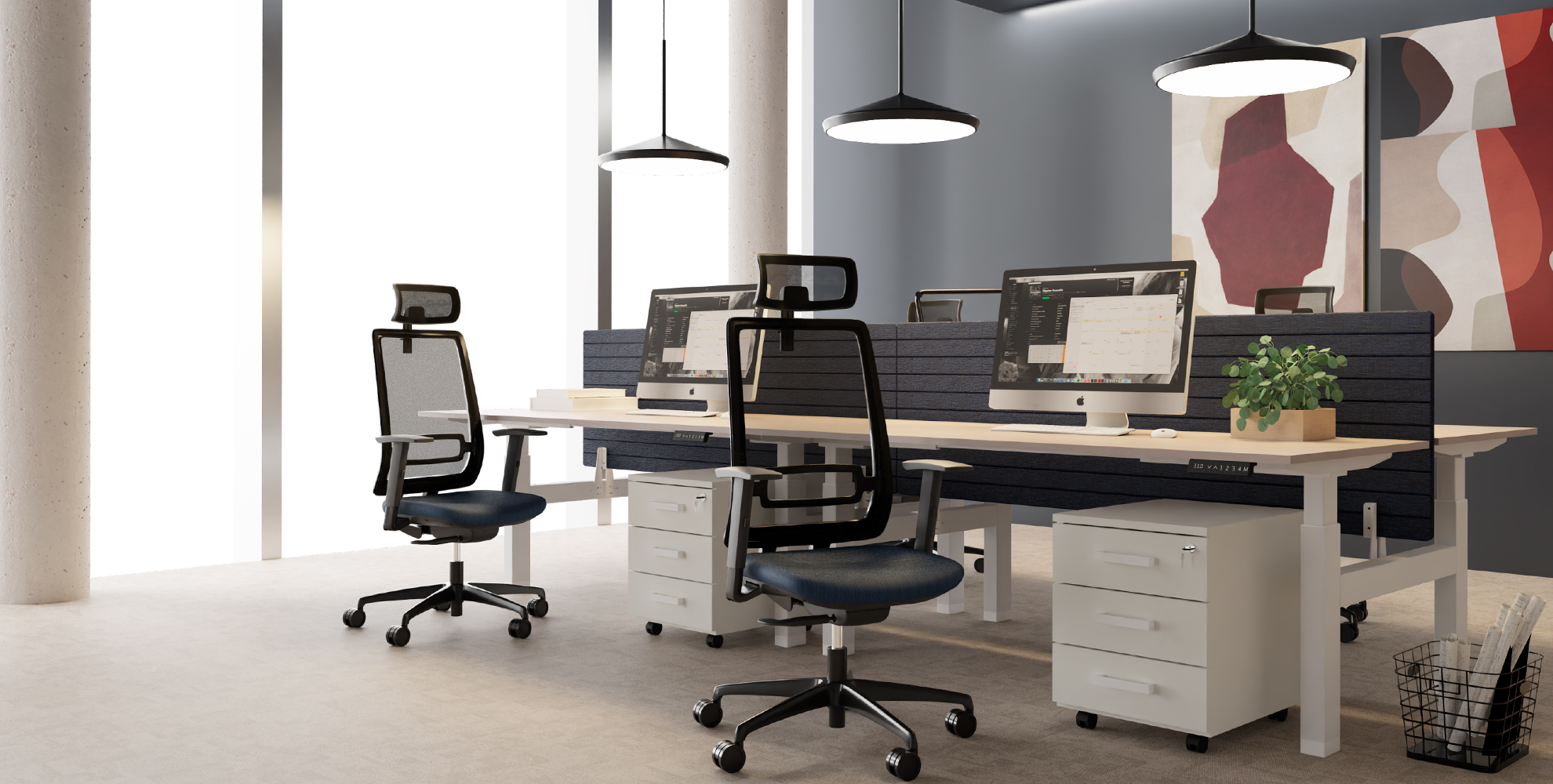
How much does a bad chair cost? The smart investment in wellness
Ergonomics without complications: what to look for in a chair
Our chairs not only take care of your body, they also take care of the aesthetics of your space.
What your chair and your back have been trying to tell you for a long time…
Ergonomics at your fingertips: 10 tips to improve your posture starting today
It’s the end of the workday and there it is again: that annoying back pain, neck tension and accumulated fatigue, despite having been sitting all day. But what if the real problem is not the time spent in the chair, but the chair itself?
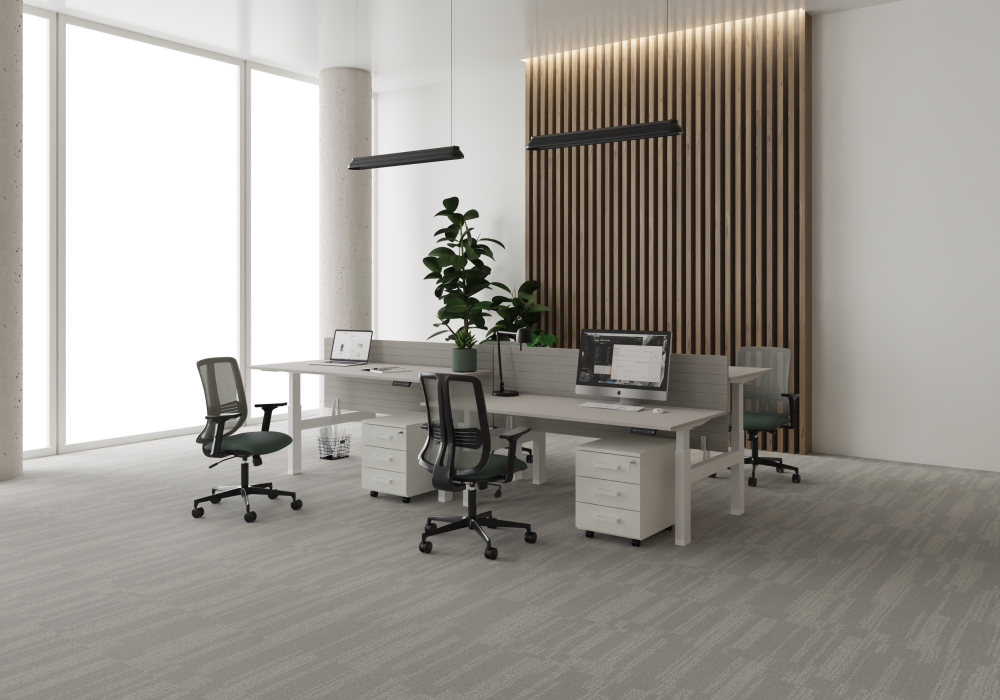
The posture we adopt and the support provided by the chair make all the difference. Often, we get so immersed in our tasks that we are unaware of how our body pays the price for poor posture.. It is said that sitting for long periods is harmful, that it reduces energy consumption to just one calorie per minute and increases the risk of disease. The solution, however, is not to avoid sitting, but to do it the right way: with an operating chair designed with a high degree of ergonomics to improve posture and comfort, which adjusts to our body, without us having to adapt to it.
INSST confirms: the chair is the key element
The National Institute for Safety and Health at Work (INSST), in its NTP 1.130establishes that, when working with computers, there are three fundamental points of support: the chair, the table and the floor. However, of these three, the chair is the key element, since it is the one that supports and shapes our posture for hours.
HISTORICAL CURIOSITY: In the 19th century, many companies used train travel to expand, which prompted the creation of a work chair equipped with springs to absorb the bumps in the ride and allow employees to continue working while on the rails. Since then, office chairs have evolved with a clear goal: to improve both productivity and well-being.
Ergonomics without complications: what to look for in a chair
Height adjustable → Allowing adaptation to as many workers as possible and ensuring that feet rest comfortably on the floor or on a footrest at a 90° angle.
Adjustable backrest → It should adapt to the natural curvature of the back, especially in the lumbar area.
Padded and breathable seat → Provide comfortable sitting for hours, preventing heat buildup and improving ventilation.
Balancing mechanism → Allows for better weight distribution, avoiding stiffness and reducing fatigue.
Armrests → To keep shoulders relaxed and prevent neck and arm tension, promoting a more natural posture.
Headrest → Reduces the load on the cervical area and provides extra support for the head, improving comfort during long days.
Casters and swivel base → Facilitate mobility and access to different areas of the workspace without the need for awkward postures.
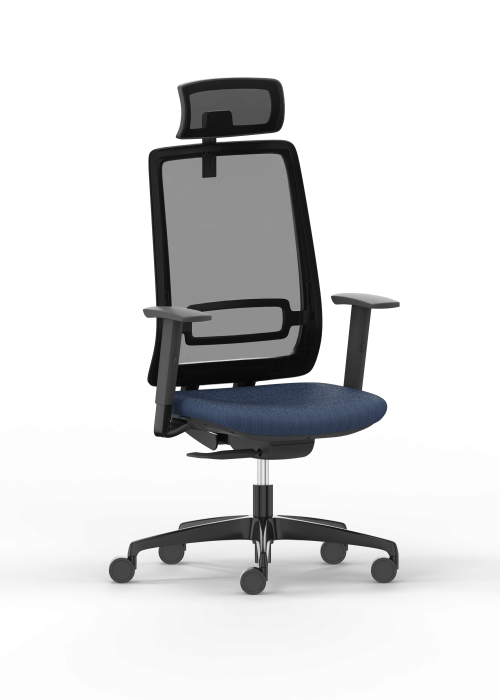
Not all chairs meet these requirements, but this is where our Tasker chair makes the difference.
A legacy in furniture design that endures to this day
Thomas Jefferson used the fixed Windsor chair but soon realized he needed something that offered more movement to improve his productivity. He devised the first swivel chair in 1775 to work on his drafting of the Declaration of Independence.
If you are a designer and want to leave your mark, collaborate with us. Contact us at and together we will make your project a reality.
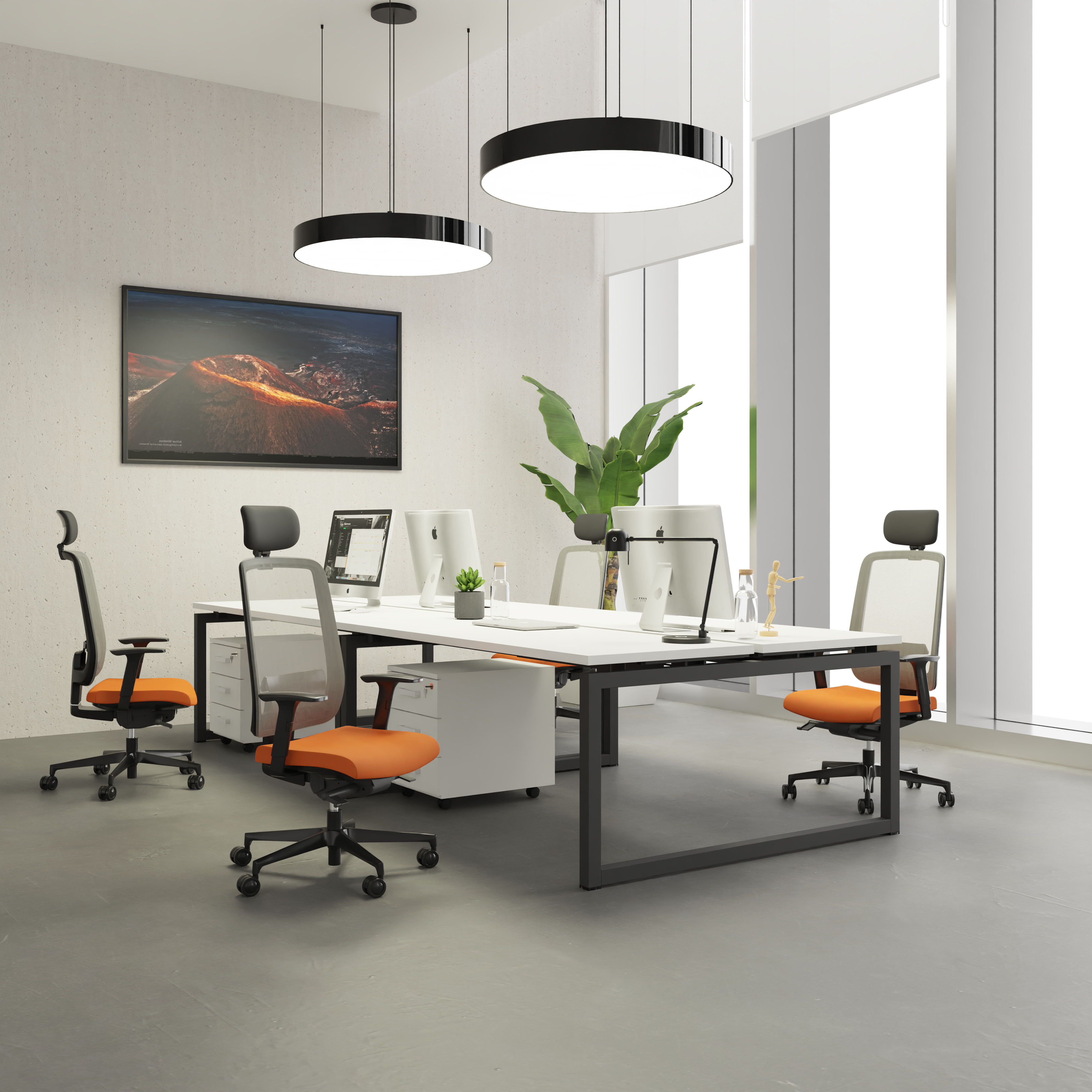
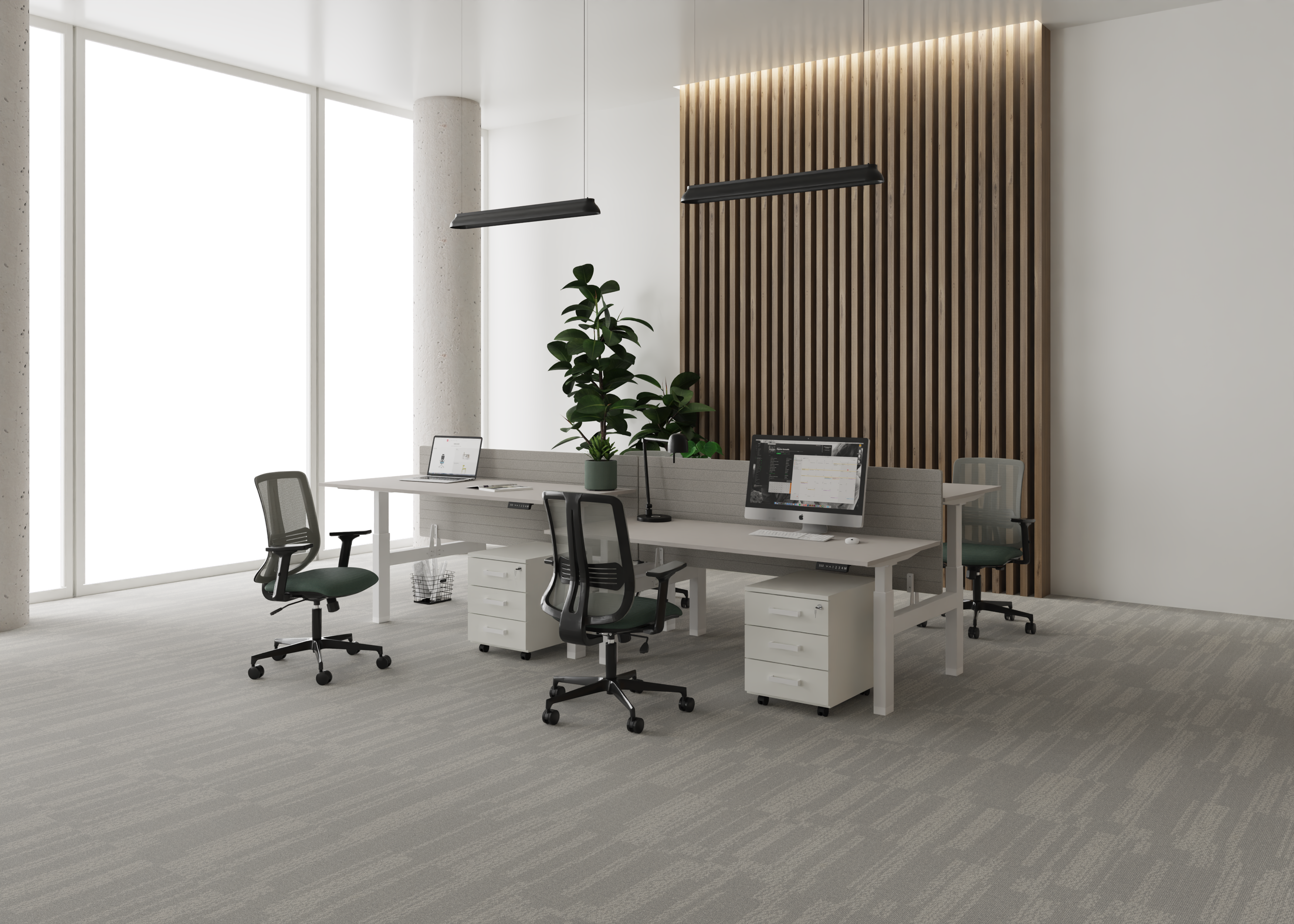

Our chairs not only take care of your body, they also take care of the aesthetics of your space.
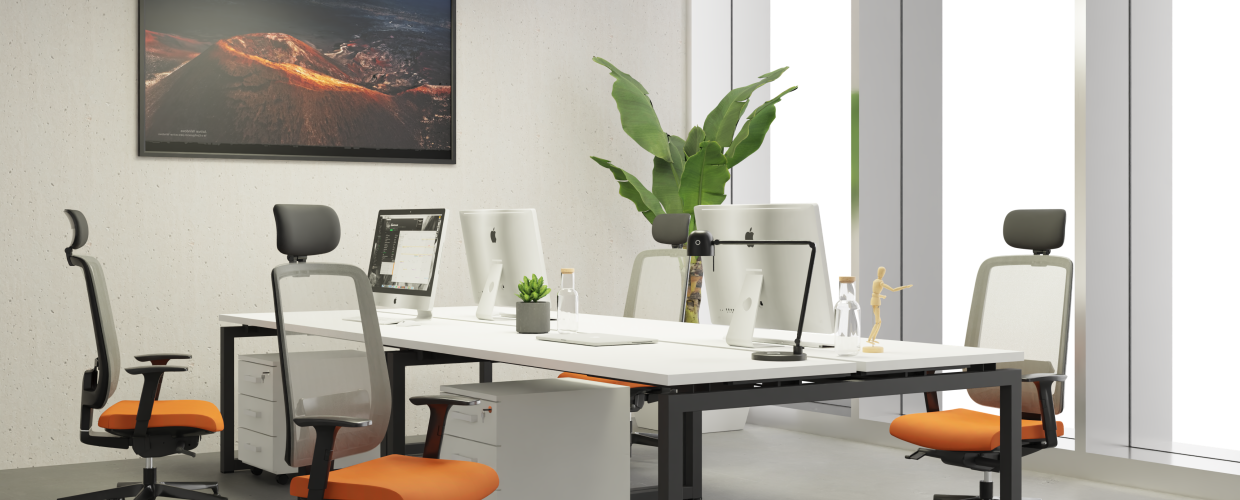
Ergonomics is essential, but it must go hand in hand with design and not to its detriment. For a long time, ergonomic chairs were seen as functional but with a design that did not integrate well into the space. On the other hand, chairs with an attractive design did not offer the necessary support and comfort that our health requires.
Just as we carefully choose the chairs for our dining room at home, looking for a balance between design and comfort, we should do the same in the office. However, often at work we choose any chair without considering whether it meets ergonomic requirements and integrates well into the space. Why not give our office the same importance as our home?
At EMOBOK, we have managed to merge the best of both worlds. Our chairs are designed to offer ergonomics without sacrificing a design that fits perfectly with any work environment. That’s why we recommend ZEN, the chair that meets all ergonomic requirements with a touch of design.
What your chair and your back have been trying to tell you for a long time…
We have already talked about what makes a chair ergonomic and the importance of design in your workspace. But are we really aware of how it influences our day-to-day lives? Think about it. We spend hours sitting, and without realizing it, poor posture saps our energy, our concentration and even our mood. The reality is that the chair you work in influences your well-being more than you think and is a key tool for productivity.
Now, have you ever stopped to think about what your body is telling you throughout the day? Maybe you’re already experiencing some of those common discomforts. But can you imagine what it would be like if your chair worked for you instead of against you? Because when you make the right choice, the benefits are noticeable from day one. In the meantime, we’ll just keep dragging these aches and pains along:
- Constant back pain → Spending hours with a slouched posture in your chair puts unnecessary pressure on your spine, causing nagging pains that affect your energy and concentration. Over time, this pain can become “normal,” but it doesn’t have to be. Your back is asking for help, and it’s up to you to give it the support it needs.
- Your mood gets worse → You become more irritable, less patient and, at the end of the day, what could have been a productive day turns into an exhausting experience. What’s worse is that you think it’s just a “bad day,” but in reality, your chair has a lot to do with it.
- Headache → That headache that comes without warning, ruining your day. And it’s no coincidence. Accumulated tension in the neck due to poor posture is closely linked to those nagging pains. If your neck is tense, your head senses it. It’s a reminder that something about your posture isn’t working.
- Accumulated stress → When your body is uncomfortable, stress begins to accumulate silently. Translating into an emotional state in which you feel less able to face the challenges of everyday life, as if time is slipping away from you and this constant discomfort prevents you from performing at your best.
- Constant distraction → We become disconnected from what we are doing and lose focus. When we have bad posture, our mind is more engaged in finding a way to relieve that pain than concentrating on the tasks you want.
- Mental fatigue → Physical discomfort directly affects your mind. In the middle of the day, you feel blocked, unable to concentrate and mentally exhausted. Lack of proper support not only wears you down physically, but also decreases your ability to perform, affecting your productivity. Your mind needs a chair that pushes you to perform at your best.
- Knee and leg discomfort → If your chair doesn’t fit your body, your legs can become too bent or extended, causing pain, numbness and circulation problems. Worst of all, it makes you feel more tired than you should, reducing your energy sooner than expected.
- Wrist and arm pain → We feel pain in our arms or tired wrists, and we usually attribute it to long hours in front of the computer, constantly typing. However, we rarely stop to think about how we spent that time. That discomfort is not just because of the duration, but because of the position our arms and hands are in while we work.
Sit down and sit up well, all in one
Feel the SEAT

Ergonomics at your fingertips: 10 tips to improve your posture starting today
We know that the chair is key to your health and productivity, but it is also essential to maintain good posture. So here are some tips to relieve tension and improve your well-being. Remember, taking care of your body is a team effort between you and your chair.
- Adjust the height of your chair. Feet resting on the floor or on a footrest. Avoid crossing your legs.
- Support your back well in the chair. Keep your back straight and avoid hunching forward.
- Place the screen at eye level about an arm’s length away **** and do not turn your back to the windows to avoid glare.
- Take active breaks, stand up, stretch and move your legs, every 30-60 minutes.
- Adjust the height of the armrests so that your elbows are at a 90-degree angle.
- Your wrists should be aligned with the keyboard and not bent.
- Perform neck, shoulder and wrist stretches throughout the day.
- Avoid staying too long in one position. If you have an elevating table, take advantage of it to work standing up from time to time.
- Keep your space tidy and use shelves at the right height to encourage you to stand up and stretch your arms when reaching for items you don’t use often.
- Disconnect 15 minutes from the screens.
Now that you know how a good chair can transform your day, why not explore all the options we have for you? Each one is designed to enhance your comfort and productivity. Take a look at our selection and find the perfect chair to suit your needs and style – your well-being and your workspace deserve the best!
If you liked this article, don’t miss the article of Modern Office Tables that might also interest you.
Is the office dead?
July 31, 2026
Emobok at MATCOAM
July 13, 2026
A Healthy Workplace Starts with the Space
June 26, 2026
Share this article

